
Why shipment risk often begins before the truck even moves
In India, supply chain failures rarely begin with a dramatic event in transit. They usually begin much earlier.
A shipment is packed in Baddi for movement into Delhi NCR. A pharma or healthcare load is staged in Hyderabad for delivery into Mumbai. A temperature-sensitive shipment is lined up in Bengaluru for movement into surrounding Tier 2 markets.
The truck is assigned.
The driver is confirmed.
The documents appear complete.
The route is known.
On paper, everything looks dispatch-ready. But then the load is released with an invoice or e-way bill mismatch. Part B is not aligned to the actual vehicle movement. The LR or consignment note does not fully reflect the assigned driver or vehicle. Pre-cooling was assumed, not verified. The shipment starts moving, but the risk has already been created.
That is the real supply chain challenge in India. Not simply tracking what happens after dispatch, but making sure every shipment was truly ready before it moved.
Why This Matters More in India
India’s supply chains operate at a scale and level of fragmentation that make weak dispatch discipline expensive.
Large networks run across thousands of lanes, multiple transport partners, varied fleet quality, inconsistent site execution, and highly uneven operating conditions across cities, depots, and customer locations. A movement may look stable in one region and become unpredictable in another. A process that works in one plant or warehouse may break down at the next node because the operating discipline on the ground is different.
A shipment moving from Baddi into North India behaves very differently from a dairy or FMCG load entering Mumbai, or a reefer movement running from Bengaluru through Karnataka into regional markets. A route that appears stable on paper can still break down operationally because of unloading discipline, city-entry congestion, transporter behavior, or site-level execution. This is where India differs from many markets.
The problem is not only in-transit execution. It is shipment readiness at source, combined with what happens when real-world variability starts affecting the movement. That is why control alone is not enough. And visibility alone is too late.
The Hidden Cost of Weak Dispatch Readiness
In many networks, a shipment is considered ready once the truck is loaded and the paperwork is attached. Operationally, that is a very low bar. Because a shipment can be loaded and still not be dispatch-assured.
The e-way bill may be incomplete. Part B may not reflect the actual vehicle or movement.
The invoice, delivery challan, or LR may not fully support the shipment as loaded.
The driver may not be correctly validated. The transport load may not be properly checked.
For cold chain, pre-cooling may not have been confirmed with discipline.
The shipment may leave the facility looking compliant while carrying avoidable downstream risk. Once that happens, the rest of the organization starts compensating.
Control towers monitor more closely.
Operations teams escalate faster.
Quality teams become more cautious.
Customers receive updates later than they should.
The business spends the journey reacting to what should have been prevented before dispatch.
That is not an in-transit problem. It is a shipment assurance problem.
Why Traditional Control Towers Hit a Ceiling
Most large supply chains today already have some form of control tower.
They can see where the truck is.
They can monitor milestones.
They can flag route deviations, delays, or temperature events.
They can escalate incidents.
This was an important first step. But in India, control towers often become strongest only after the shipment is already moving. By then, a large share of the avoidable risk is already embedded in the movement.
And because Indian networks generate constant variability, control towers can easily become alerting systems rather than decision systems. They show what is happening, but they do not always tell the business what requires intervention, what can wait, and what should never have been dispatched in the first place. That is why many operations teams feel busier without feeling more in control.
They have more data.
More alerts.
More escalations.
But not always more certainty.
Where the Operating Model Needs to Evolve
The next operating model in India has to extend beyond visibility and into shipment assurance across the full execution lifecycle.
That starts before the truck moves.
A stronger model validates every shipment before dispatch by checking:
- documentation and compliance readiness, including invoice, delivery challan, LR, e-way bill, and Part B alignment
- driver and transport load validation
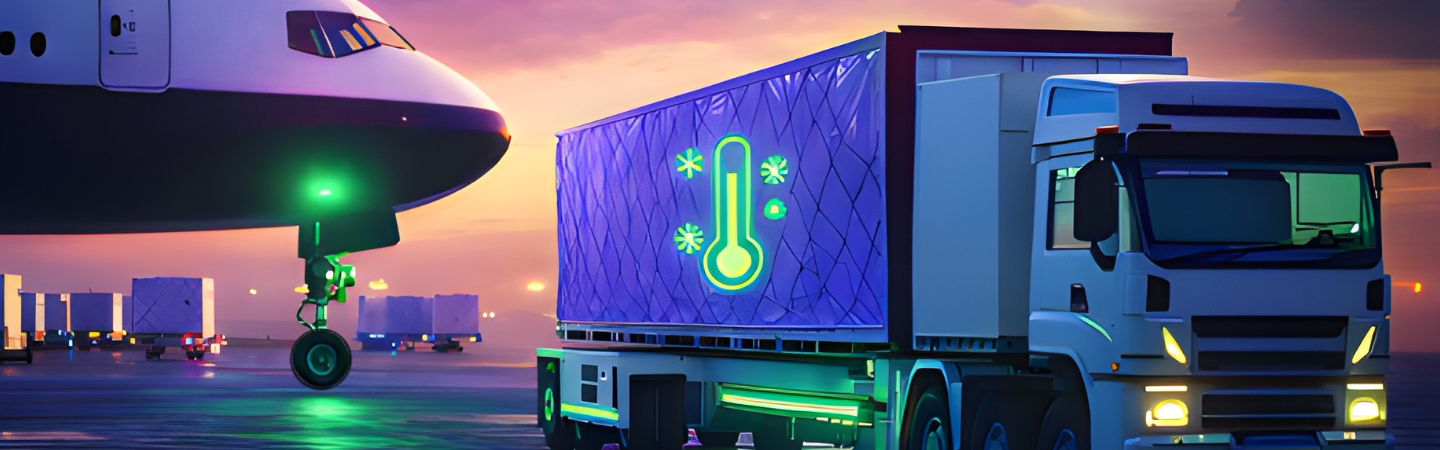
- dispatch conditions for temperature-sensitive movements, including pre-cooling
- whether the shipment should actually be released in its current state
Once the shipment is moving, the model must maintain assurance in transit.
That means not just watching location, but monitoring for secure transport, identifying risk patterns, and predicting ETA deterioration early enough to act. Where delay begins to affect time-bound compliance steps or document validity, the system should help the business intervene before the shipment becomes non-compliant. In Indian operating reality, that may mean updating Part B when the assigned vehicle changes or when delay and movement variance begin to affect compliance continuity. And finally, the shipment needs to close cleanly, with auditable proof of delivery rather than open loops, calls, screenshots, and manual reconciliation.
This is where the narrative becomes much sharper. The issue is no longer visibility alone.
It is whether the business can assure the shipment from dispatch to delivery.
Where Decklar Fits
This is where Decklar’s value proposition becomes highly relevant.
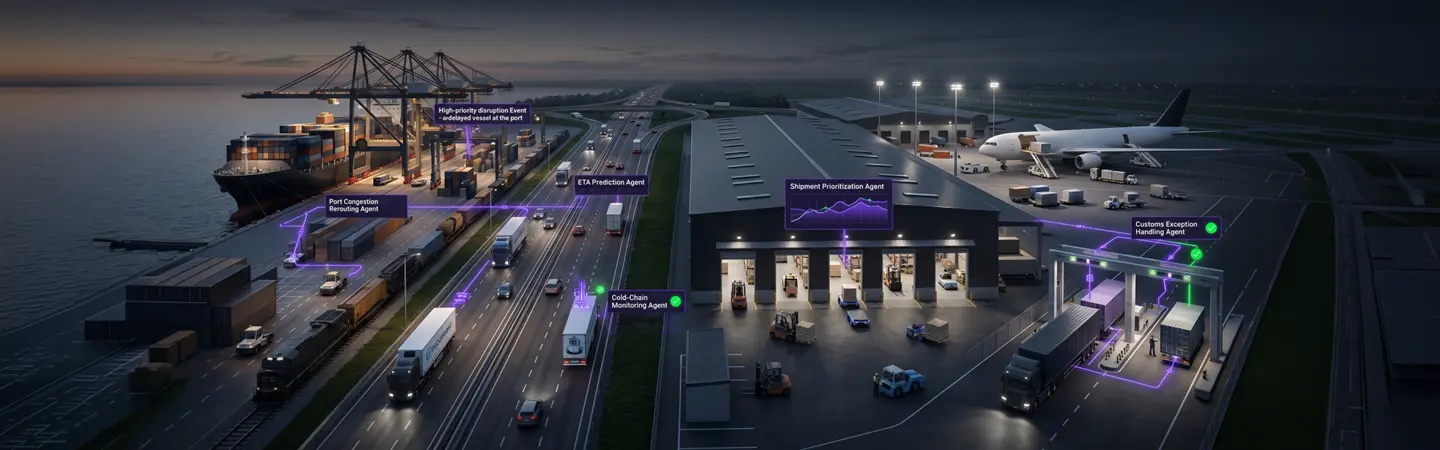
The clearest way to understand Decklar in this context is not as just another tracking platform. It is as a shipment assurance and decisioning layer spanning dispatch, in-transit execution, compliance continuity, and delivery closure.
At dispatch, Decklar helps validate whether the shipment is actually ready to move by checking documentation, driver and load readiness, and pre-dispatch conditions such as pre-cooling for cold chain. In practice, that means helping ensure that the invoice, LR, e-way bill, Part B, and shipment details are aligned before the load leaves the facility.
In transit, Decklar provides monitoring capabilities to support secure transport, giving the business more confidence that the shipment remains protected and operationally on track. Its RADAR model is positioned not as passive milestone tracking, but as a more proactive control layer focused on anticipating risk and enabling intervention.
Where ETA risk emerges, Decklar’s predictive capability helps the business act before delay creates a larger issue. In time-bound documentation scenarios, that means enabling updates to Part B-style documents where delay risk, vehicle reassignment, or route variance could otherwise create expiry or non-compliance exposure.
At destination, Decklar closes the loop with ePOD and automated goods receipt / quality-release workflows, helping ensure that completion is clean, auditable, and easier to reconcile operationally.
That is a much stronger value story than visibility alone.
It moves from:
seeing the shipment
to validating the shipment
to protecting the shipment
to closing the shipment with confidence
Observed in Practice
A relevant example from Decklar’s case-study library comes from a leading global chocolatier operating across South Asia. The company was managing more than 24,000 temperature-sensitive shipments per month across 92 cold-chain transport lanes and facing inconsistent transporter practices, environmental exposure, and limited visibility across key developing-market corridors.
Decklar’s Decision AI and automated quality-release approach helped lift cold-chain compliance from 57% to over 90%, avoid a full transport infrastructure overhaul, and unlock $9.3M+ in annual savings while protecting market continuity. More importantly, it enabled quality protection without network drag: the business improved compliance and release confidence without forcing every shipment into heavier manual inspection, tighter blanket controls, or slower flow.
That case matters because the lesson goes beyond cold chain. The breakthrough was not just better monitoring. It was the ability to identify which shipments, lanes, and execution patterns actually required intervention, and which could continue to flow without unnecessary friction. That is exactly the operating shift Indian supply chain leaders now need across dispatch, compliance, security, ETA management, and proof of delivery.
Why This Matters Beyond India
India should remain the primary lens because the operational complexity is most visible there.
But the broader point extends across the subcontinent.
Bangladesh’s export-heavy flows are highly sensitive to dispatch discipline, compliance continuity, and delivery assurance because margin for delay is thin and shipment reliability is critical.
Sri Lanka’s corridor-sensitive logistics environment creates similar pressure around movement assurance, especially where trade fluidity depends on tightly coordinated handovers and clean shipment execution.
So while the operating realities differ, the lesson is similar across South Asia:
The market does not just need visibility after dispatch. It needs more confidence before, during, and at the close of every shipment.
The Strategic Takeaway
For supply chain and transportation leaders, the question is no longer whether shipments can be tracked.
Most already can.
The real question is whether each shipment can be:
- validated before dispatch
- monitored intelligently in transit
- protected against compliance and delay risk
- closed out with auditable delivery confirmation
That is where the next advantage will come from.
Not from watching more shipments.
But from assuring each shipment more effectively across its lifecycle.
In India, that is becoming a major operating advantage.
In Bangladesh and Sri Lanka, it is increasingly relevant for the same reason.
Because in South Asia, the real breakthrough is no longer seeing the shipment.
It is assuring the shipment from dispatch to delivery.
In South Asia, supply chain confidence will increasingly depend not on how well you track shipments, but on how well you assure them before, during, and after movement.

Nitesh Mandal, Regional Vice President, EMEA, Decklar
Nitesh Mandal is the Vice President of Sales for EMEA & India at Decklar, with over 15 years of experience driving supply-chain efficiency and digital transformation for global enterprises. In this role, he leads sales and account management, helping Global 2000 organizations implement Decision AI across complex supply chains. Prior to joining Decklar, Nitesh held senior global leadership roles at Maersk, most recently as Head of Growth, Strategy & Solution Design, where he managed multi-million-dollar P&L portfolios and led warehousing, logistics, and supply-chain optimization initiatives. He holds a Master’s degree in Logistics and Supply Chain Management from Lancaster University, UK, along with CLTD and CSCP certifications from APICS..